Progress Monitoring Made Simple: Systems That Actually Work
Let’s be honest.
Progress monitoring sounds simple in theory… until you’re staring at 17 IEP goals, three different curriculums, and a stack of sticky notes that were supposed to become data.
If you’ve ever thought:
- “I’ll enter it later.”
- “I swear I took data somewhere.”
- “Is this even meaningful?”
You’re not alone.
The good news? Progress monitoring does not have to take over your life. You just need a system that works with your schedule, not against it.
Let’s simplify this.
First: What Progress Monitoring Is (And What It Isn’t)
Progress monitoring is simply collecting consistent data to determine whether a student is making progress toward their IEP goals.
That’s it.
It is not:
- A 20-minute assessment every day
- A perfectly color-coded binder
- A 14-tab spreadsheet you never open
- A guilt spiral every 9 weeks
It’s consistent, intentional data collection that helps you make decisions.
If your current system feels overwhelming, the system is the problem, not you.
The 3-Part System That Actually Works
Here’s the framework that keeps things manageable in middle school inclusion settings.
1. Choose a Predictable Data Schedule
Instead of asking, “When should I take data?” every week, decide once.
Examples:
- Reading goals → Mondays
- Math goals → Wednesdays
- Behavior goals → Daily quick check
- Functional goals → Fridays
When data collection is tied to a day, it becomes routine instead of reactive.
Pro tip: If it’s not scheduled, it won’t happen.
2. Use One Method Per Goal (Not Five)
Not every goal needs a different fancy system.
Stick to one of these simple methods:
- ✔️ Work sample percentage
- ✔️ Quick skill probe (5 problems, 1 minute)
- ✔️ Rubric score
- ✔️ Frequency tally
- ✔️ Behavior rating scale
If you can explain how you collect the data in one sentence, it’s simple enough.
If it requires a paragraph… simplify it.
3. Track It Where You’ll Actually Look at It
This is where most systems fall apart.
If your data lives:
- In random notebooks
- On sticky notes
- In your brain
- In 4 different Google Drive folders
It’s not a system.
Choose one home base:
- A printed data binder
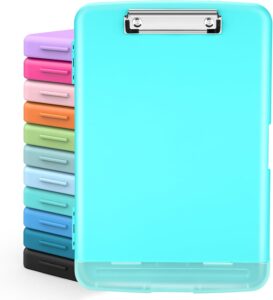
- A clipboard with goal sheets
- A single Google Sheet
- A digital form you use every time
Consistency beats complexity every single time.
What to Do When You’re Behind on Data
First: take a breath.
Second: do not try to recreate 6 weeks of data from memory.
Instead:
- Restart today.
- Add a note explaining the gap if needed.
- Adjust your system so it’s sustainable.
Progress monitoring is about patterns over time — not perfection every week.
The Middle School Inclusion Reality
Inclusion teachers don’t always control:
- The curriculum
- The pacing
- The assessments
- The schedule
So your data system must work inside someone else’s classroom.
That’s why embedded data collection works best:
- Take math goal data from the actual math assignment.
- Use class discussions for reading comprehension goals.
- Track behavior during natural transitions.
You do not need separate activities for every goal.
You need intentional observation.
Simple Doesn’t Mean Sloppy
A simple system is still legally sound if it is:
- Consistent
- Measurable
- Documented
- Connected to the IEP goal
Administrators and parents want to see progress — not a Pinterest-worthy binder.
If You Want to Make It Even Easier…
Create reusable goal tracking sheets that:
- Match common middle school goals
- Have built-in data collection methods
- Require minimal prep
- Keep everything in one place
When your system is plug-and-play, progress monitoring becomes routine instead of stressful.
Final Reminder
Progress monitoring should support your teaching, not exhaust you.
If your current system feels overwhelming, it’s not because you’re bad at organization.
It’s because teachers were never given realistic systems for doing this in real classrooms.
Start small.
Pick one structure.
Be consistent.
That’s what actually works.
5 Must Have Tools for a co-taught Classroom
Tools for Progress Monitoring:

Join the newsletter
Subscribe to get our latest content by email.