5 Must-Have Organizational Tools for a Co-Taught Classroom (And How to Use Them!)
Co-teaching is a rewarding but often complex dance. With two teachers, two teaching styles, and double the materials, organization is the bedrock of a successful co-taught classroom. When you and your partner teacher have a shared system, you spend less time searching and more time teaching.
Here are five essential organizational tools that will help you and your co-teacher streamline your shared space, materials, and lesson plans, along with practical tips on how to put them to work!
1. Rolling Storage Cart with 10 Large Drawers
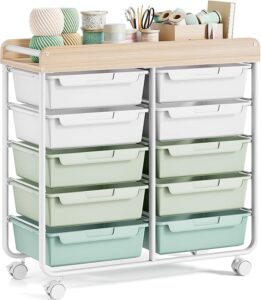
A Rolling Storage Cart with Drawers and a Wooden TableTop is the ultimate mobile command center. Its utility can’t be overstated in a shared space where dedicated desk real estate might be limited.
How to Use It:
- Designated Teacher Drawers: Assign five drawers to one teacher and five to the other. Use them for personal items, extra supplies, or lesson materials for the week. Since the drawers are large, they can hold full file folders or large manipulatives.
- Shared “Grab & Go” Supplies: Use the drawers closest to the top for the things you both use daily: dry-erase markers, highlighters, tape, or emergency passes.
- “Prep Station” Tabletop: Use the wooden tabletop as a temporary prep surface. It’s a perfect place to set up a small document camera, a laminating machine, or simply stack papers that need to be graded or copied. The wheels mean you can roll it to the photocopier, your desk, or into a small group instruction area.
2. 4″ x 6″ Photo Cases and Clear Craft Keeper
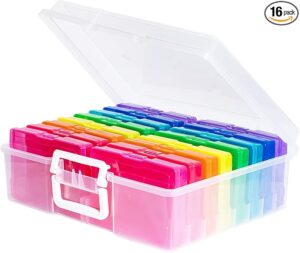
Stop rummaging through Ziploc bags for small teaching supplies! The 4″ x 6″ Photo Cases in a Clear Craft Keeper are a compact, efficient way to manage small parts, task cards, and centers.
How to Use It:
- Organize Task Cards and Centers: This is the ideal tool for sorting and storing small group activity cards, flashcards, or manipulatives for math and literacy centers. Each of the 16 cases can be labeled by skill, topic, or lesson. For example, one case can hold ‘Vocabulary Match-Up Cards’ and another ‘Fraction Tiles.’
- I use this for all of my Wilson cards for reading instruction!
- Easy Transport: The clear outer case with a handle makes it easy for either teacher to grab a specific center activity and move it directly to a small-group table.
3. Smead Slash Jacket, Letter Size
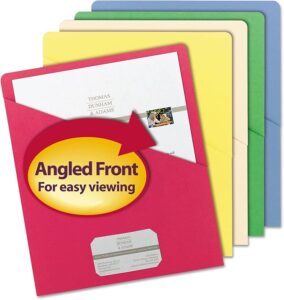
I use these for everything! The Smead Slash Jacket (an open-top, slant-cut file pocket) is a sleek, simple, and affordable way to manage works-in-progress, assignments, and handouts.
How to Use It:
- Separating Classes: I co-teach 4 classes (2 math and 2 ELA) I use them to keep tests that need to be made up, extra handouts, notes, etc.
- Weekly Lesson Materials: Label a jacket for each day of the week. Place all necessary handouts, worksheets, and teacher keys for Monday into the “Monday” jacket. On the day, simply pull the entire jacket and everything you need for that day’s lessons is together.
- Classroom Management Forms: Keep essential, recurring forms—like hall passes, substitute feedback forms, or behavior trackers—in a clearly labeled jacket by the classroom door.
4. Premium Plastic Book Holders with Name Labels
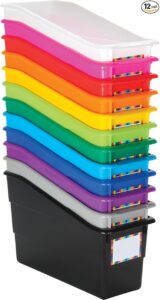
Shared classroom libraries can become chaos if systems aren’t clear. Premium Plastic Book Holders that are durable and include space for labels are the key to a clean, well-organized reading center.
How to Use It:
- Sort by Reading Strategy/Skill: Instead of just genre, organize by the skill or strategy you are teaching. Label bins for ‘Making Predictions,’ ‘Inferring,’ or ‘Sequencing.’ This makes it easy for both teachers to pull texts directly related to the current lesson focus.
- Leveling System: If you use a leveled system (like F&P or Lexile), color-code the bins to match your level chart. The labels ensure both you and your co-teacher are putting books back in the right spot, maintaining the library’s integrity.
- Co-Teacher Curriculum Integration: Reserve a couple of bins for supplemental texts that directly align with a specific social studies or science unit one teacher is leading. Label them clearly, like “Social Studies: Government Unit.”
5. 3-Ring Binder, 1-Inch
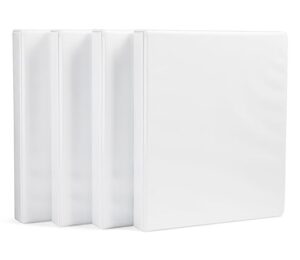
While digital planning is great, sometimes you need a reliable physical binder. The 3-Ring Binder is a simple, cost-effective tool for consolidating core documents into one easily shared resource.
How to Use It:
- The Co-Teaching Binder: This is the single most important binder in your room. Use it to keep all your essential shared planning documents:
- Section 1: Co-Planning Notes: Agendas and minutes from your weekly co-planning sessions.
- Section 2: IEP/504 Snapshots: Non-confidential quick-reference sheets for student accommodations (keep sensitive full documents secure elsewhere).
- Section 3: Emergency Sub Plans: A generic, ready-to-go set of plans that either of you can grab in a pinch.
- Assessment Tracker: Use one binder (with sheet protectors) for tracking a specific set of shared data, such as running records or formative assessment results for a whole class unit. This keeps the data accessible to both teachers at all times.
A co-taught classroom thrives on communication, but it also thrives on clear systems. By implementing these five organizational tools, you and your partner teacher can spend less time managing the “stuff” and more time collaborating on instruction!
What’s the one organizational tool you can’t live without in your classroom?
FREE co-teaching checklist

Subscribe to receive a free co-teaching checklist!